 JoeisaRobot
JoeisaRobot
JoeisaRobot
Industrial buyers now face a difficult filtration decision. The wrong system can increase energy use, maintenance hours, and product losses. The right system protects equipment, workers, and final-product quality. This guide examines 10 Best Filtration Systems for Industrial Buyers, using practical criteria rather than attractive brochures.
Market evidence supports careful evaluation. Grand View Research reports continued growth in the global industrial filtration market through 2030, driven by stricter water-quality requirements, process automation, and expanding manufacturing output. MarketsandMarkets also identifies dust collection, liquid filtration, and membrane systems as major industrial demand areas. However, market estimates differ by product scope. Buyers should check the research method before trusting any headline figure.
Performance depends on the application. A cartridge filter may suit a cleanroom coolant loop. A baghouse may handle heavy dust near a cement kiln. A membrane system can reduce dissolved contaminants, but fouling remains a serious concern. Filtration expert Dr. Norman N. Li has stated, “Membrane separation uses a selective barrier to control which components pass through.” That principle applies broadly. Selection must consider flow rate, particle size, pressure drop, temperature, chemical compatibility, cleaning cycles, and disposal requirements.
Real-world experience matters. A filter that performs well in a laboratory may fail beside a vibrating pump. Small details matter. Gasket swelling, wet dust, and irregular maintenance can change results quickly. This ranking compares system design, operating cost, service access, safety features, and evidence from established manufacturers. No single solution fits every plant. That is the uncomfortable truth.
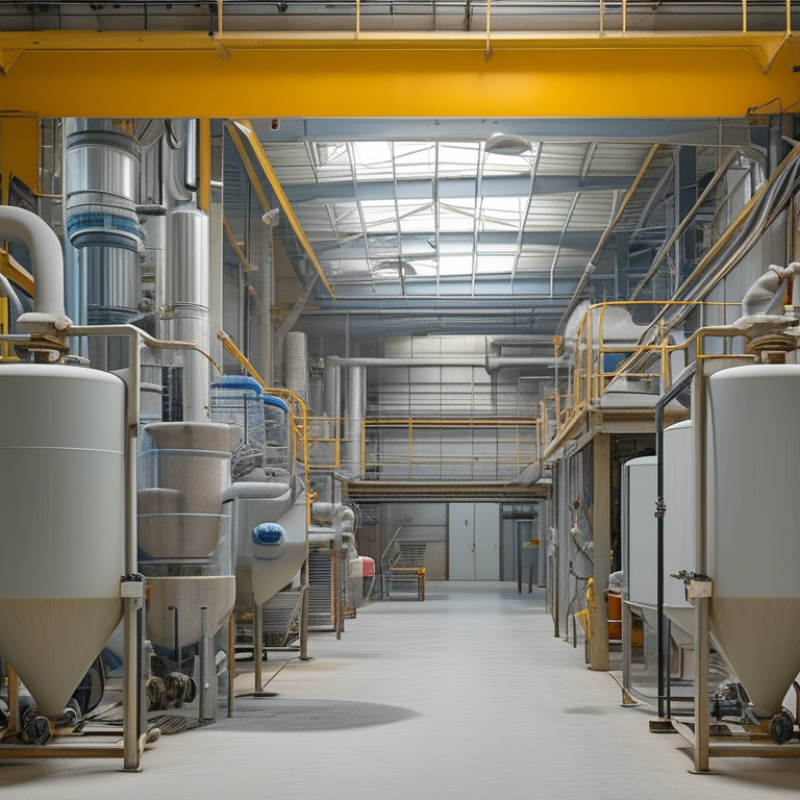
Industrial Filtration Systems: Purpose, Principles, and Main Categories
Industrial filtration systems protect equipment, products, workers, and receiving environments from unwanted particles or contaminants. They separate solids, liquids, gases, or microorganisms from a process stream. The operating principle is simple: a porous medium captures contaminants while allowing the target fluid to pass. In practice, however, pressure drop, flow variation, temperature, and chemical compatibility complicate selection.
Mordor Intelligence estimates the industrial filtration market could grow from about USD 41.38 billion in 2025 to USD 55.16 billion by 2030, reflecting demand for cleaner production and tighter process control. Industrial buyers commonly compare cartridge, bag, membrane, centrifuge, electrostatic, and cyclone systems. Cartridge and bag units suit many liquid applications, while membranes support fine separation and water reuse. Cyclones handle larger dust particles with limited maintenance. Electrostatic systems can capture fine airborne material, but performance may decline when dust properties change.
Real-world testing matters. A filter that performs well in a laboratory may clog quickly beside a dusty crusher or high-temperature furnace. Buyers should review micron rating, cleanable capacity, disposal needs, spare availability, and verified pressure-loss data. The rating alone misleads. Field conditions often expose weaknesses that product sheets overlook. According to the U.S. Environmental Protection Agency’s industrial emissions guidance, particulate controls must be matched to pollutant characteristics and operating conditions, not selected by efficiency claims alone.
Comparative overview of major industrial filtration systems, their operating principles, typical filtration ranges, and suitable applications. Selection should be confirmed against flow rate, pressure, temperature, chemical compatibility, and contaminant characteristics.
| Rank | Filtration System | Primary Principle | Typical Particle or Separation Range | Main Strength | Common Industrial Applications | Key Buyer Considerations |
|---|---|---|---|---|---|---|
| 1 | Bag Filter Housing | Depth or surface filtration through a replaceable fabric or synthetic bag. | Approximately 1–100 micrometres, depending on media and construction. | Cost-effective removal of suspended solids from moderate- to high-flow liquid streams. | Cooling water, process water, coatings, chemicals, oils, and wastewater prefiltration. | Check bag material, operating temperature, pressure rating, seal design, and change-out method. |
| 2 | Cartridge Filter System | Particles are retained on or within pleated, wound, or melt-blown cartridges. | Approximately 0.5–100 micrometres; absolute ratings are available for selected designs. | Flexible, compact polishing filtration with broad media options. | Food and beverage liquids, hydraulic fluids, solvents, paints, chemicals, and final process polishing. | Compare dirt-holding capacity, pressure drop, cartridge area, compatibility, and disposal requirements. |
| 3 | Automatic Self-Cleaning Filter | A screen or mesh element is cleaned automatically by flushing, suction scanning, or mechanical action. | Commonly about 10–3,000 micrometres, depending on screen design. | Reduced manual maintenance and continuous or near-continuous operation. | Irrigation, cooling-water circuits, intake water, industrial process water, and pretreatment systems. | Evaluate cleaning-cycle water use, minimum flush flow, automation controls, and solids loading. |
| 4 | Centrifugal Separator | Centrifugal force separates dense solids or immiscible phases from a flowing liquid. | Most effective for relatively dense particles, often above approximately 5–10 micrometres. | No disposable filter media and low routine maintenance for suitable contaminants. | Sand removal, cooling-water protection, machining fluids, grit separation, and solids pre-separation. | Performance depends strongly on particle density, flow velocity, pressure, and solids concentration. |
| 5 | Sand or Multimedia Filter | Suspended solids are captured throughout one or more granular media beds. | Typically removes particles in the approximate 10–50 micrometre range, depending on design and water quality. | Handles large water volumes and variable suspended-solids loads. | Municipal and industrial water treatment, cooling towers, surface-water pretreatment, and wastewater polishing. | Size the bed for loading rate, backwash capacity, media depth, turbidity, and available installation space. |
| 6 | Activated Carbon Filter | Adsorption onto the high internal surface area of granular or powdered activated carbon. | Not primarily a particle-size filter; commonly targets dissolved organic compounds, chlorine, taste, and odor. | Effective treatment of many dissolved contaminants and organics. | Water dechlorination, solvent and VOC reduction, odor control, process-water treatment, and wastewater polishing. | Consider carbon type, empty-bed contact time, contaminant concentration, breakthrough monitoring, and regeneration or replacement. |
| 7 | Ultrafiltration Membrane | Pressure-driven membrane separation using pores small enough to retain colloids, macromolecules, and many microorganisms. | Approximately 0.01–0.1 micrometres nominal pore scale; often specified by molecular-weight cut-off. | Produces low-turbidity water while retaining many dissolved salts. | Surface-water treatment, industrial wastewater reuse, biological treatment separation, and pretreatment for reverse osmosis. | Review feed fouling potential, pretreatment, transmembrane pressure, recovery, cleaning chemicals, and concentrate handling. |
| 8 | Microfiltration Membrane | Low-pressure membrane filtration blocks suspended solids, bacteria, and larger colloids by size exclusion. | Approximately 0.1–1 micrometre nominal pore scale. | Efficient clarification and microbial reduction without significant dissolved-salt removal. | Beverage clarification, process-water treatment, wastewater reuse, and membrane bioreactor separation. | Assess flux, fouling control, backwash or air-scour requirements, integrity testing, and cleaning frequency. |
| 9 | Reverse Osmosis System | High pressure drives water through a semipermeable membrane while rejecting many dissolved salts and contaminants. | Rejects dissolved ions, many organics, microorganisms, and particles; separation is not normally expressed as a particle rating. | High-purity water production and substantial dissolved-solids reduction. | Boiler feedwater, ultrapure-water pretreatment, industrial reuse, desalination, and formulation water. | Specify feedwater chemistry, pretreatment, recovery, operating pressure, energy use, permeate quality, and reject disposal. |
| 10 | Industrial Air or Dust Collector | Inertial impaction, interception, diffusion, and sometimes electrostatic attraction capture airborne particles. | Commonly handles dust from submicrometre particles to coarse particles, depending on filter media and collector type. | Controls airborne dust and protects workers, equipment, and downstream processes. | Metalworking, woodworking, mineral processing, cement handling, pharmaceutical production, and bulk-material transfer. | Evaluate airflow, dust explosibility, temperature, moisture, pressure drop, cleaning method, emissions limits, and safe dust discharge. |
: Record flow rate, pressure, temperature, viscosity, particle size, and contaminant loading. Measure conditions across a normal production shift. Include peak demand, not only average flow.
Pressure drop shows how the system behaves during real operation. Record inlet and outlet pressure regularly. A rising difference may indicate clogging, poor prefiltration, or excessive flow.
No. A five-micron rating describes a test condition, not every plant condition. Heavy loading, changing viscosity, and higher flow can reduce performance. The number needs context.
Compare particle size, flow capacity, pressure loss, maintenance access, and contaminant type. Cartridge filters suit compact polishing. Bag filters handle heavier solids. Membranes provide fine separation but may foul.
A pilot test can expose blinding, channeling, wetting problems, and unexpected adsorption. It should use representative flow and fluid conditions. Pilot results often deserve more weight than polished sales language.
Inspect the space around the housing before purchase. Technicians need safe access for removal, drainage, inspection, and replacement. A loaded element may require lifting equipment. That detail is easy to miss.
Include energy, replacement elements, labor, disposal, inspections, training, and downtime. A low purchase price may hide frequent shutdowns. Budget estimates are often too optimistic.
Use differential-pressure records and verified flow performance to set replacement limits. Do not rely only on calendar dates. Recheck the limits after three months of operating data. Conditions may change.
Industrial Filtration Systems are essential for removing unwanted particles, liquids, gases, and contaminants from industrial processes, helping protect equipment, improve product quality, and support reliable operations. This article explains the basic purpose and working principles of filtration, then compares ten major system types, including approaches suited to air, water, chemicals, and process fluids. It also outlines how to evaluate performance through filtration efficiency, flow rate, pressure drop, contaminant capacity, and consistency under real operating conditions.
For industrial buyers, selecting the right system requires balancing capacity, filter media, maintenance demands, installation requirements, energy use, and total operating cost. The discussion also highlights safety standards, proper handling procedures, inspection routines, and long-term considerations such as replacement intervals, system durability, scalability, and waste management. By reviewing these factors together, buyers can make informed decisions that improve process stability, reduce downtime, and achieve dependable filtration performance over the equipment’s service life.
